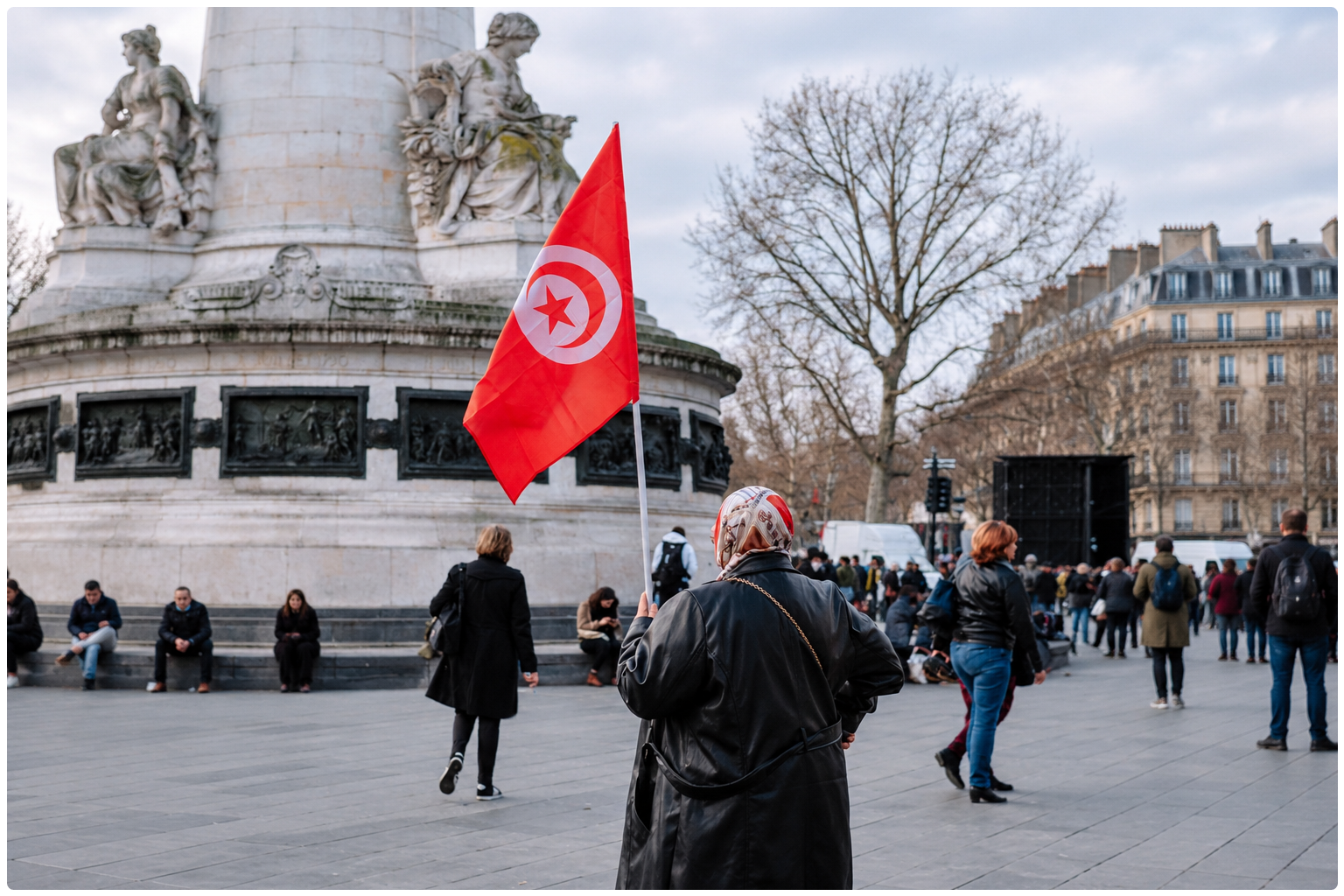
Tunisia's highest court has upheld lengthy prison sentences against dozens of opposition politicians, lawyers and human rights activists convicted of conspiring against state security, closing the final avenue of appeal in one of the country's most controversial political trials.
The Court of Cassation rejected appeals from 34 defendants on Thursday, leaving in place sentences ranging from five to 45 years. The charges included conspiracy against Tunisia's internal and external security, membership of a terrorist organisation and attempting to change the form of the state.
The defendants have denied the allegations and maintained that the case was politically motivated.
Among those convicted are some of Tunisia's most prominent government critics. National Salvation Front leader Ahmed Nejib Chebbi was sentenced to 12 years in prison, while opposition figures Ghazi Chaouachi, Issam Chebbi, Jaouhar Ben Mbarek and Ridha Belhaj received 20-year sentences. Former Justice Minister and Ennahda politician Noureddine Bhiri was sentenced to 10 years.
The wider case originally involved 40 defendants, including political leaders, lawyers, businessmen and activists. Around half had left Tunisia and were tried in absentia.
Lawyers representing the defendants have repeatedly challenged the fairness of the proceedings. They said they were given only three days' notice before the final Court of Cassation hearing, leaving insufficient time to prepare. Rights groups have also criticised defendants being required to participate remotely in earlier proceedings rather than being physically present in court.
The case has become a major focus of criticism over Tunisia's political direction under President Kais Saied.
Saied was elected in 2019 but dramatically expanded his powers in July 2021, when he suspended parliament, dismissed the government and began ruling by decree. He subsequently dissolved parliament and the independent Supreme Judicial Council, while dozens of judges were dismissed. Critics say those moves have weakened the democratic institutions established following Tunisia's 2011 revolution.
Saied rejects accusations that he is establishing authoritarian rule and has defended prosecutions of opposition figures as necessary to protect national security and combat corruption. He has previously described defendants in the conspiracy case as “traitors” and “terrorists” and accused them of attempting to destabilise Tunisia.
Human rights organisations have sharply criticised the latest ruling. Amnesty International described the original proceedings as politically motivated and marred by serious due-process violations, while Human Rights Watch said the final ruling reflected a broader pattern of attacks on Tunisia's judiciary and political opposition.
The decision comes amid growing scrutiny of the treatment of journalists and other government critics.
Police on Friday arrested Mohamed Yousfi, editor-in-chief of investigative news outlet Al-Qatiba and a prominent critic of Saied, as he was preparing to enter Express FM for a radio appearance. A judge subsequently ordered him detained on allegations of illicit enrichment and money laundering. Tunisia's journalists' union said Yousfi was questioned about his journalistic work and Al-Qatiba's editorial line, linking the arrest to his criticism of the government.
Several other Tunisian journalists have been jailed or prosecuted this year. The Committee to Protect Journalists says arrests, criminal prosecutions and increasingly severe sentences have contributed to a broader deterioration in press freedom in a country once regarded as one of the Arab world's strongest examples of democratic transition after the 2011 Arab Spring.
With the Court of Cassation ruling, the defendants have exhausted their final domestic judicial route to overturn the convictions, shifting the dispute increasingly from the courts to Tunisia's wider political struggle over Saied's consolidation of power.