Traffic across the bridge linking Russia to Crimea was stopped on Monday morning after a Ukrainian drone attack damaged the crossing. Hundreds of kilometres away, fires broke out at industrial facilities in southern Russia, while air defences around Moscow faced another wave of incoming aircraft.
The overnight operation on November 15–16 was the largest Ukrainian drone assault recorded in Russian Defence Ministry reports since Moscow launched its full-scale invasion in February 2022.
Russia's Defence Ministry said it intercepted 1,336 Ukrainian fixed-wing drones over 16 regions and surrounding waters, including the Black Sea and Sea of Azov.
War in Ukraine 🇺🇦🇷🇺 Following the successful strikes on the strategic Kerch Bridge, recent footage has surfaced detailing the structural damage sustained from the drone and missile deployment 🧵 #Russia #Ukraina #KerchBridge https://t.co/zWaehBBU6Y
— Skenderbeu (@Skenderbeu0622) November 17, 2026
Ukraine has not confirmed launching that number. The ministry's interception figures cannot be independently verified, and they do not establish how many drones reached their intended targets.
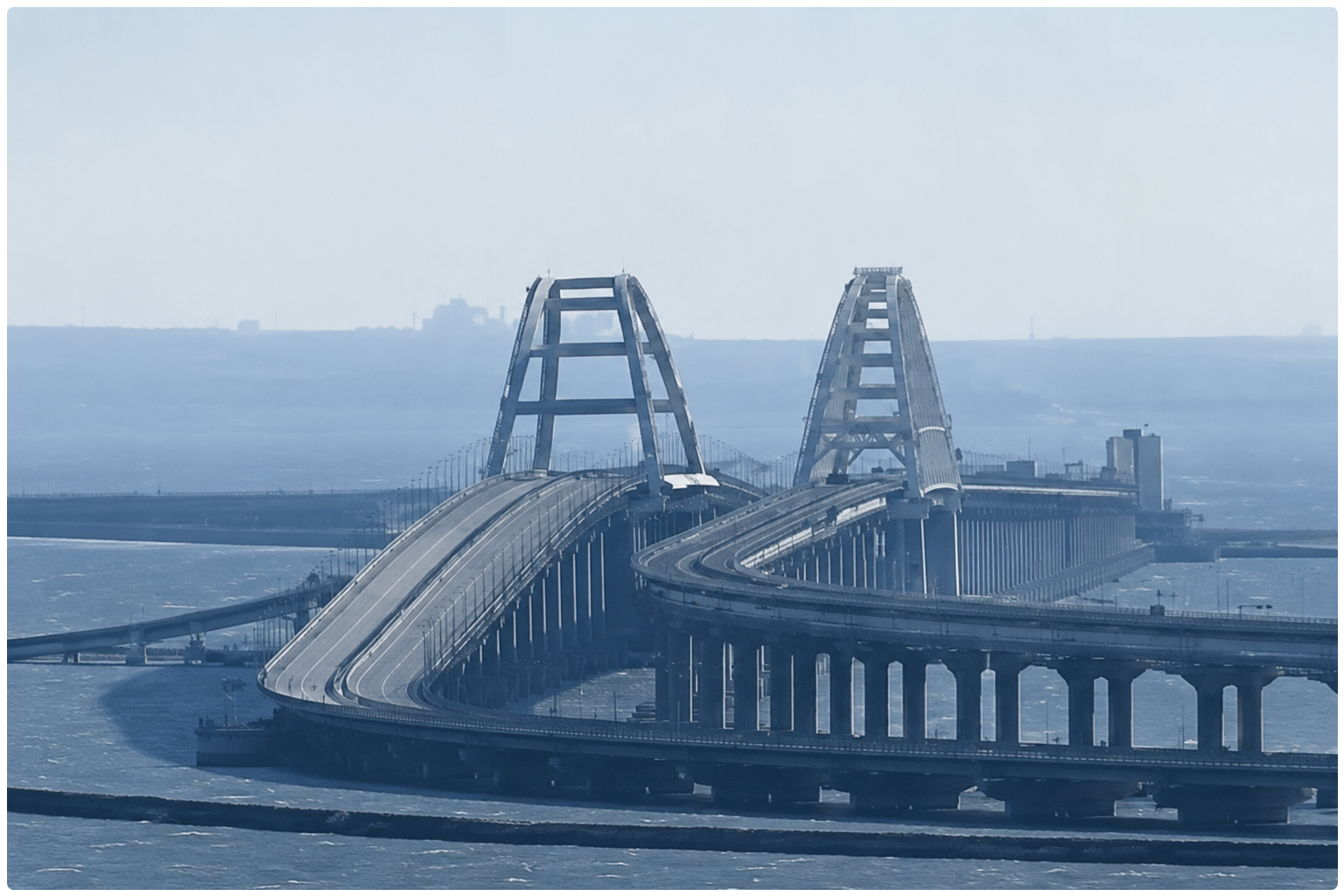
The attack on the Kerch Strait bridge produced one of the clearest signs of disruption. The crossing carries road and railway traffic between Crimea and Russia's Krasnodar region and is an important transport route for Russian operations on the peninsula.
Crimean leader Sergei Aksyonov confirmed that the bridge had been struck. Russia's Transport Ministry suspended road traffic while engineers assessed damage and began repairs. Railway services continued, according to the ministry, which initially reported no casualties.
Vehicle movement subsequently resumed under a restricted, alternating traffic arrangement. Officials described the damage as limited, although a full structural assessment was not publicly available.
In southern Russia, Ukraine's General Staff confirmed a strike on the Flash Energy oil depot in Azov, Rostov region. Ukrainian forces reported explosions and a fire at the facility, but said the extent of damage was still being assessed.
The military also identified strikes against Russian command positions and equipment concentrations in Russian controlled territory. Those operational results have not been independently established.
Ukraine has concentrated increasingly on fuel infrastructure supporting Russian logistics. In a November 15 address, President Volodymyr Zelenskyy said Ukrainian strikes had halted more than 55% of Russia's oil-refining capacity. Independent evidence does not establish a disruption of that magnitude.
The latest attacks followed a separate barrage against Russia on November 12–13, when Moscow reported intercepting 1,198 drones and Ukrainian forces acknowledged hitting the Volgograd oil refinery.
The numbers reflect the growing scale of long-range drone warfare, but they offer only a partial picture of its military results. Large interception totals reveal the demands being placed on Russian air defences; the damage to the Crimea bridge and fuel installations offers more tangible evidence of where some aircraft penetrated those defences.
By Monday evening, repairs to the bridge were continuing. Russia's transport authorities had restored limited road access, but had not announced when unrestricted traffic would resume.