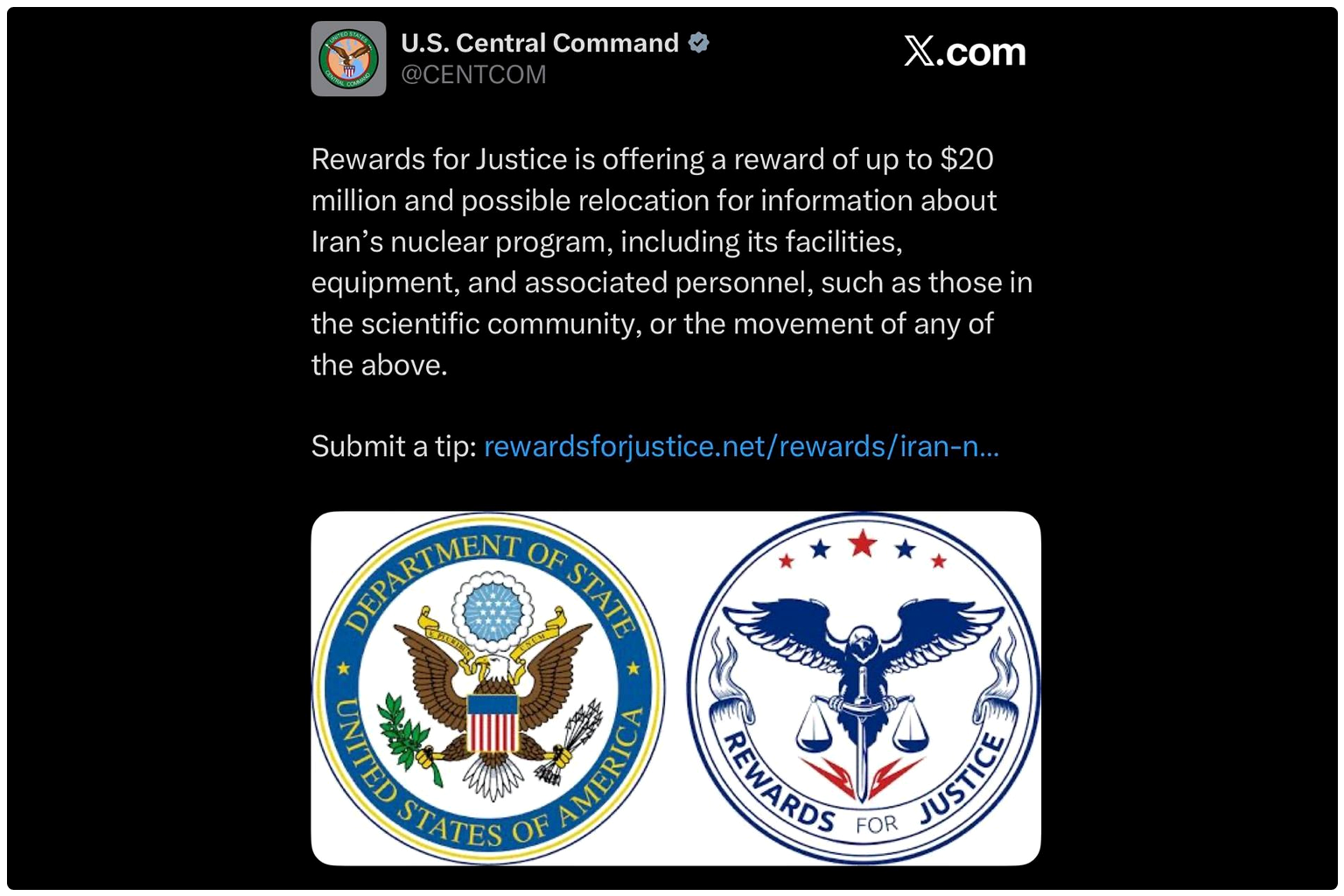
The United States is offering up to $20 million for information about Iran's nuclear facilities, equipment and personnel, opening a new intelligence-gathering effort as Washington considers further military action against Tehran. The offer comes despite President Donald Trump's repeated assertions that American strikes have effectively destroyed Iran's nuclear programme.
The US State Department's Rewards for Justice programme is seeking information about nuclear infrastructure, scientists, associated personnel and the movement of equipment or people connected to Iranian nuclear activities. It also offers the possibility of relocation for individuals who provide useful intelligence.
US Central Command publicised the initiative on Friday, November 6. The announcement specifies a maximum reward rather than a guaranteed payment, and Washington has not disclosed what evidence would qualify an informant for the full amount.
The breadth of the request suggests that the United States is seeking information not only about known nuclear installations but also about personnel and equipment that may have been relocated or become difficult to monitor.
American concerns extend beyond the physical condition of Iran's nuclear facilities. The International Atomic Energy Agency has struggled to maintain a complete account of Iranian nuclear material and equipment following restrictions on inspections and military strikes.
In its September 2025 safeguards assessment, the agency described serious gaps in its ability to verify Iran's nuclear activities after attacks on nuclear sites and interruptions to inspection access.
The State Department's reward notice cites Iran's earlier enrichment of uranium to 60 percent purity, well above the level normally required for civilian nuclear power and approaching the 90 percent commonly associated with weapons-grade material. Enrichment at that level does not, by itself, establish that Iran has produced a nuclear weapon.
Tehran maintains that its nuclear programme is peaceful and rejects accusations that it intends to manufacture nuclear weapons. Iranian officials have also argued that American and Israeli attacks damaged the prospects for international nuclear monitoring and further negotiations.
The reward announcement exposes a tension in Washington's public position. Trump has repeatedly portrayed earlier strikes as having devastated Iran's nuclear capabilities, yet the new intelligence appeal indicates that American authorities continue seeking information about the programme's infrastructure, personnel and remaining capabilities.
The development also comes as diplomatic efforts continue to prevent another major confrontation. Qatar has been mediating exchanges between Washington and Tehran over nuclear inspections, sanctions and maritime restrictions, while the United States has maintained pressure through military operations and economic measures.
Those restrictions form part of a wider American sanctions and blockade campaign that Iran has resisted while leaving open the possibility of a negotiated settlement.
The reward programme provides no indication that Washington has obtained new intelligence confirming an operational Iranian nuclear weapons programme. Its immediate purpose is to solicit information that could help American authorities establish what nuclear material, equipment and expertise remain accessible to Tehran.
With inspections constrained and military options still under consideration, the condition of Iran's nuclear programme remains central to the dispute between the two governments.