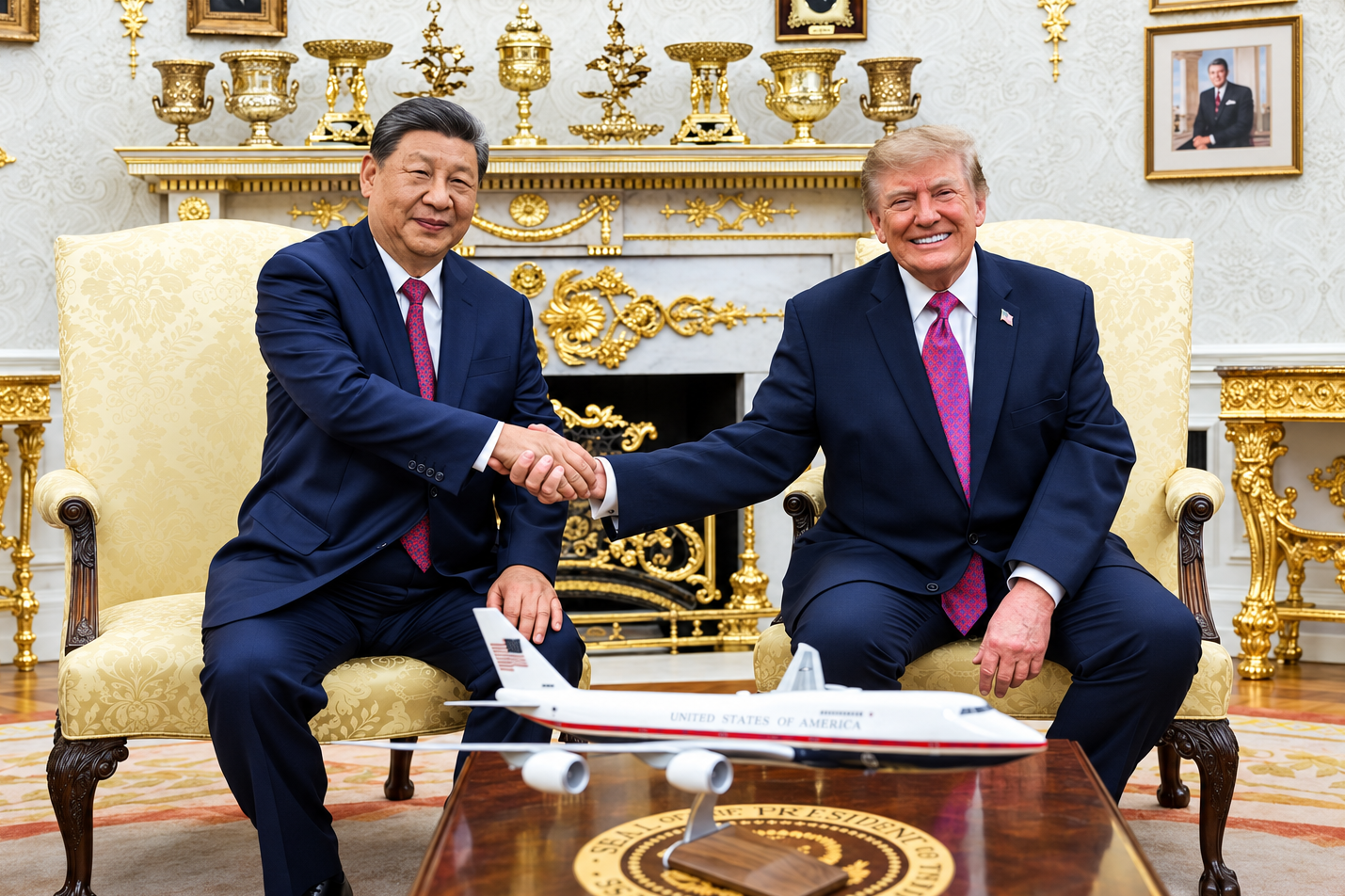
The United States and China have agreed to cut tariffs on $30 billion worth of goods and to open a formal dialogue on artificial intelligence. It is the most concrete outcome of Chinese President Xi Jinping's three-day visit to Washington. Both governments announced the measures on Friday and Saturday, part of an eight-point consensus reached as the summit ended.
The tariff deal is reciprocal. The White House said the two sides agreed on more favourable tariff treatment for $30 billion of "non-sensitive" goods in each direction. China will lower tariffs on American exports such as agricultural products, wood and cosmetics. The US will lower tariffs on Chinese imports including small appliances, toys and decorations. According to the White House, China also committed to buy at least 10 million tonnes of US coal in each of 2027 and 2028. The two sides set up working groups on agricultural market access and on stabilising the global oil supply.
The trade measures build on an extended truce. Earlier in the week, US Treasury Secretary Scott Bessent said the two countries had pushed back the expiry of their trade truce, due on November 10, by two months. That gives negotiators more time to work toward a bigger deal. The leaders also endorsed a joint trade council and extended the results of earlier trade talks in Kuala Lumpur.
The AI dialogue may prove the more significant step. The two countries will exchange views on the risks and benefits of artificial intelligence, with the next round of talks scheduled for November. They will also set up a bilateral communication channel for AI-related incidents. The agreement is one of the first times Washington and Beijing have jointly acknowledged the need to coordinate on the technology, even as AI remains a central front in their economic competition, alongside semiconductors and other advanced technologies.
The consensus also covered foreign policy. The leaders agreed that Iran must uphold its commitment not to develop nuclear weapons. The White House used stronger wording, saying Iran can never possess one. They also agreed that transit fees should not be imposed on international waterways, a clear reference to the Strait of Hormuz. A separate provision covers law enforcement cooperation against drug trafficking, which both sides say has already led to dozens of arrests.
Beijing framed the visit in sweeping terms. According to China's foreign ministry, the leaders agreed to build a constructive relationship of strategic stability based on mutual respect, fairness and reciprocity. Foreign Minister Wang Yi said the visit had opened a new chapter in China-US relations. Xi repeated his view that the two powers can avoid the "Thucydides Trap", the idea that a rising power and an established one are destined for conflict, by strengthening communication and cooperation. Both leaders have signalled plans to attend events hosted by the other: China hosts APEC and the US hosts the G20.
The deal leaves major disputes unresolved. It is modest next to the full scale of trade between the two economies. Tensions over export controls, rare-earth minerals, technology and shipping persist. Just a day after the summit, Beijing told Tehran it would not comply with Washington's new Iran sanctions. Even so, a dedicated AI incident channel and reciprocal tariff relief give the two sides tools they did not have before, and some breathing room.