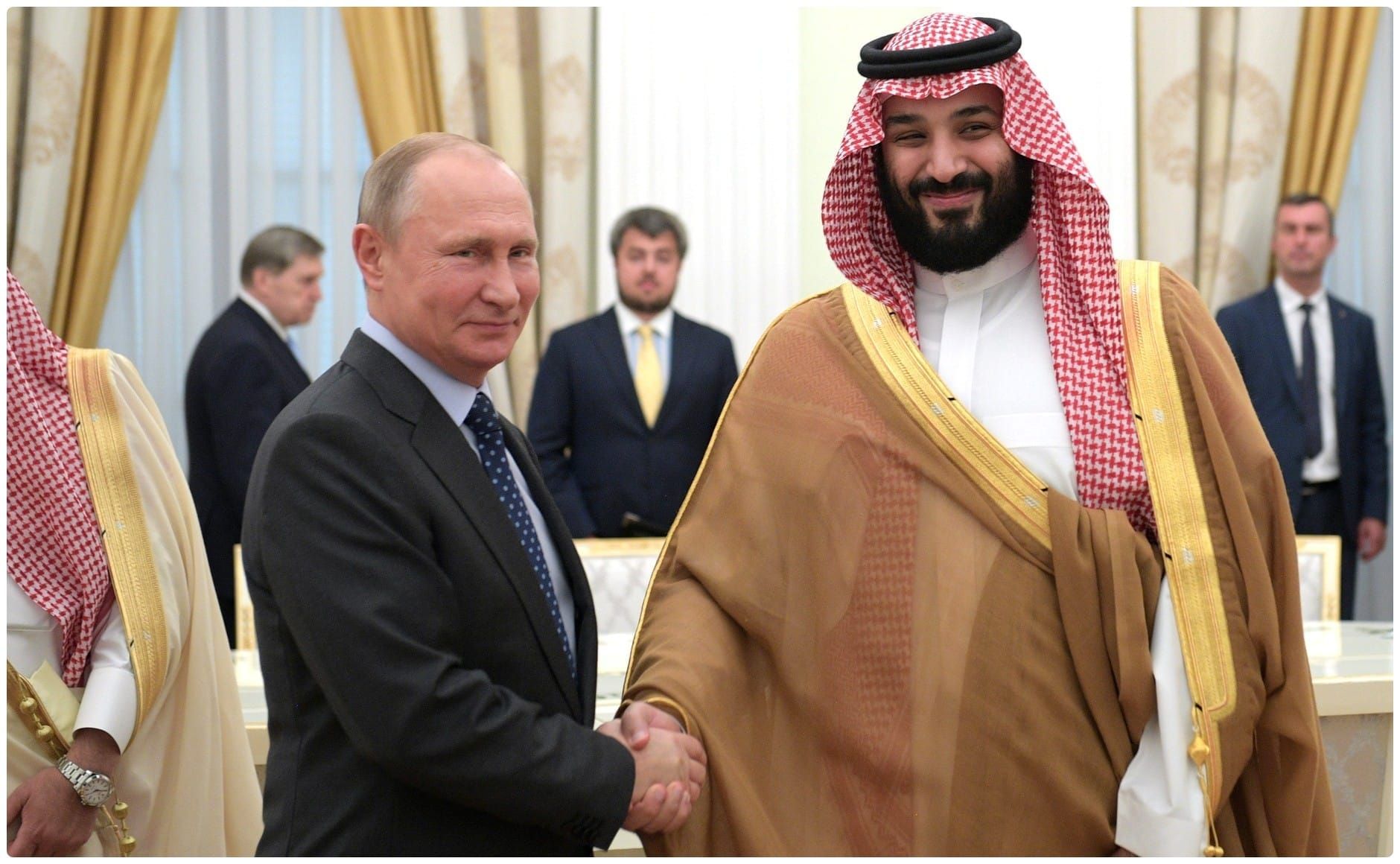
Russian President Vladimir Putin and Saudi Crown Prince Mohammed bin Salman have called for safe and unhindered passage through the Strait of Hormuz and Bab el-Mandeb, as conflict threatens two of the world’s most important maritime trade routes.
The two leaders discussed the crisis during a telephone conversation on September 22. They also reviewed the worsening military situation in Yemen and called for a rapid end to hostilities, arguing that diplomacy remains the only viable route to a broader settlement in the Middle East.
Their intervention reflects growing concern in Riyadh over disruptions affecting both its eastern and western oil-export routes. The Strait of Hormuz connects the Persian Gulf to the Gulf of Oman and the Arabian Sea, while Bab el-Mandeb links the Red Sea to the Gulf of Aden and the Indian Ocean.
Hormuz is the principal maritime outlet for oil and gas produced by Saudi Arabia, Iran, Iraq, Kuwait, Bahrain, Qatar and the United Arab Emirates. The passage is only about 39 kilometres wide at its narrowest point and contains separate two-mile-wide channels for vessels entering and leaving the Gulf.
Commercial traffic through the strait has fallen sharply during the conflict involving Iran and the United States. Only two commodity vessels were recorded crossing on Monday, compared with a pre-war average of about 125 large commercial ships each day. Some vessels may have passed with their tracking systems switched off, but the figures illustrate the scale of the disruption.
Two tankers were also struck while travelling through the strait, although the perpetrators were not immediately identified. Iran has used access to Hormuz as leverage in negotiations, linking unrestricted navigation to an end to military attacks and economic pressure.
Saudi Arabia had sought to reduce its dependence on Hormuz by transporting crude through its East-West Pipeline to the Red Sea port of Yanbu. That alternative was weakened after a drone attack forced the pipeline to close temporarily.
The kingdom’s western export route has simultaneously come under pressure from Yemen’s Houthi movement. Houthi forces have expanded their control along the Red Sea coast and around Bab el-Mandeb, while warning vessels connected to Saudi Arabia against passing through the waterway.
Bab el-Mandeb is essential to shipping between Europe and Asia because vessels passing through it can continue north towards the Suez Canal. Ships avoiding the strait must travel around Africa’s Cape of Good Hope, adding thousands of kilometres, higher fuel expenditure and longer delivery times.
The simultaneous disruption of both passages has left Saudi Arabia with few secure options for exporting crude. Some shipments have continued through Hormuz, while others have been redirected towards Egypt and the Suez Canal. Tankers have also turned around or altered their routes following security warnings.
The crisis has raised freight and war-risk insurance costs and contributed to volatility in global energy markets. It also exposes the vulnerability of an international oil system that depends heavily on a small number of narrow waterways.
Mohammed bin Salman has sought stronger external support against the Houthis, but the United States has so far avoided restarting a sustained military campaign in Yemen. Washington previously bombed Houthi positions but later reached an understanding under which the group agreed not to attack American vessels.
Russia’s involvement provides Riyadh with another diplomatic channel. Moscow maintains relations with Saudi Arabia through their cooperation in the OPEC+ oil alliance while also retaining close ties with Iran.
The Putin-Mohammed bin Salman call did not produce an announced security mechanism for either strait. It instead represented a joint diplomatic appeal to keep the waterways open and end the fighting in Yemen. Achieving that objective will depend on negotiations involving Iran, the Houthis, Gulf governments and the United States.