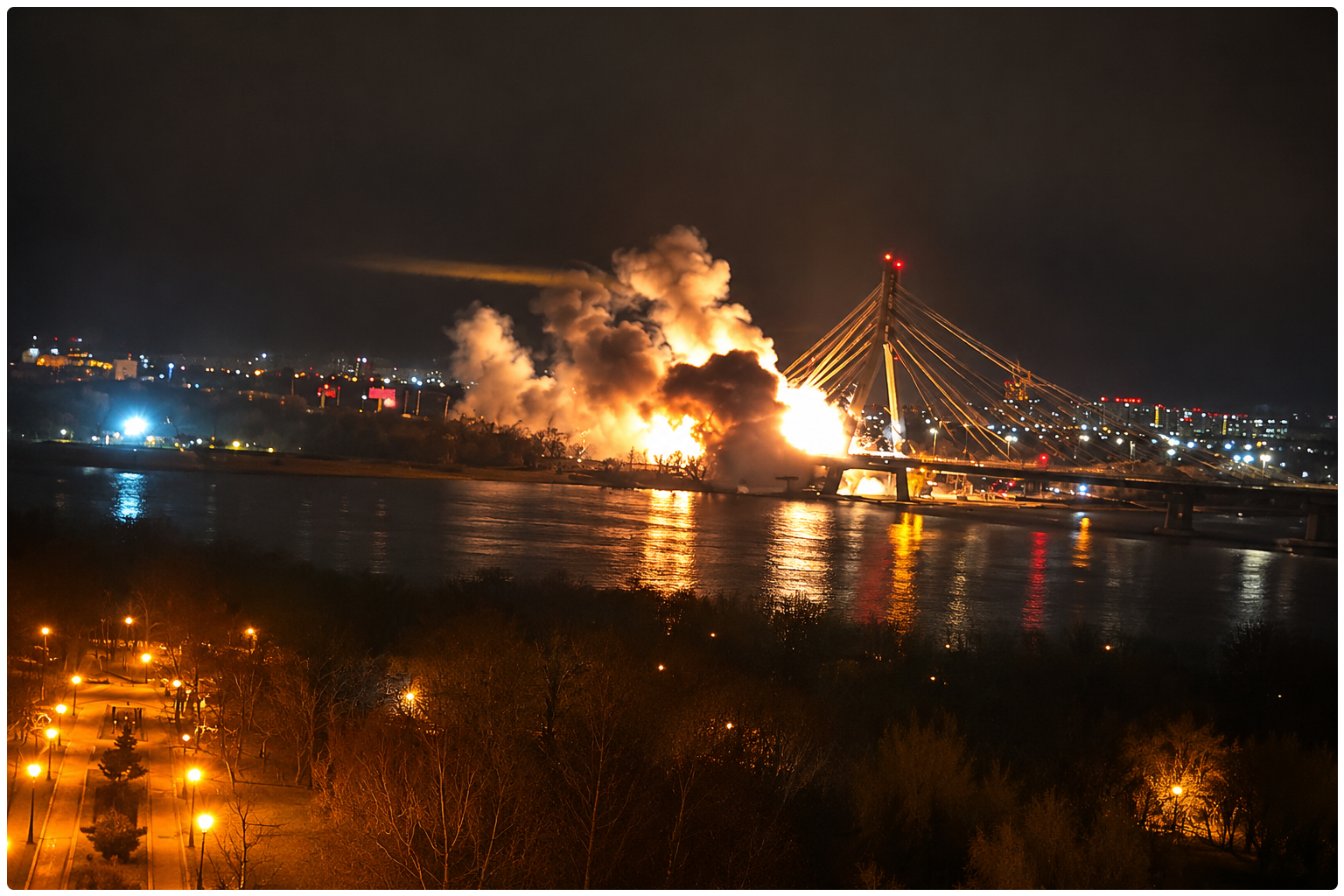
For residents of Kyiv, crossing the Dnipro River has become increasingly difficult. Two of the capital's major bridges were struck during a Russian missile attack late Monday, November 16, forcing fresh traffic restrictions and disrupting water and heating supplies across parts of the city.
The Northern and Southern bridges were hit shortly before midnight, according to preliminary information released by Mayor Vitali Klitschko. Air defence systems were operating over the capital as explosions were reported across several districts.
🚨BREAKING NEWS ▪️New missiles are hurtling toward their targets. In Kiev, traffic across the Northern and Southern bridges has been completely shut down following the strikes.🇷🇺🚀🔥 ▪️ In addition to the bridges, energy facilities were hit, and metro infrastructure sustained damage during the overnight attack. ▪️ Trains are operating only on the underground section between the "Syrets" and "Vydubychi" stations. All underground stations are serving as shelters during the air-raid alert. ▪️ Six "Iskander-K" missiles, launched from the Poltava region, are currently heading toward the Cherkasy region—specifically the Chornobai area—and continuing on toward the city of Cherkasy.
— Aleksey The Great 🇷🇺🎖 (@aleksthgrt) November 17, 2026
The mayor confirmed the reported impacts through his official communication channel, subsequently reporting damage to critical infrastructure and interruptions to essential services.
By Tuesday morning, municipal authorities had suspended traffic across both bridges and diverted public transport. Trolleybus services on routes 29, 37, 47 and 48 were also interrupted, while damage to above-ground metro infrastructure affected services on the green line between Osokorky and Chervonyi Khutir.
Neither bridge was reported destroyed, and the extent of structural damage from the latest strikes had not been established.
For Kyiv's transport network, the attack compounds an existing problem. Russian strikes in October had already disrupted three major crossings, forcing road closures and interrupting metro services. Repair crews were still working to restore damaged infrastructure when the latest attack occurred.
Engineers were still examining parts of the crossing when the latest attack occurred.
The Northern Bridge had also required repairs. On November 8, Kyiv authorities partially reopened it following structural inspections, restoring limited traffic after an earlier strike.
The attacks are part of a broader pattern of strikes against the capital. An earlier Russian missile and drone offensive targeting Kyiv and Dnipro had also damaged infrastructure and disrupted essential services, adding to the pressure on repair teams.
The attacks were not confined to Kyiv. Ukrainian officials reported missile strikes or explosions in Kharkiv, Dnipro, Zaporizhzhia and the Cherkasy region. At least three people were injured in Cherkasy, according to regional authorities.
Hours before the bombardment, President Volodymyr Zelenskyy had warned Ukrainians about intelligence indicating an imminent Russian attack. He urged residents to pay attention to missile alerts throughout Monday night and Tuesday.
The targeting of bridges has become a recurring feature of the conflict. On November 9, following a meeting with military commanders and government officials, Zelenskyy said Russia was attempting to disrupt connections across the Dnipro, while simultaneously attacking Ukraine's electricity network. Moscow maintains that its strikes target transport routes and infrastructure supporting Ukrainian military operations.
The latest attacks came as Ukrainian, American and European representatives continued diplomatic discussions on ending the war. Kyiv confirmed further consultations with US envoys Steve Witkoff and Jared Kushner on Monday.
For the city's transport authorities, the immediate task is more practical: determining which sections of the damaged crossings can safely reopen, while maintaining alternative routes for residents who depend on them.