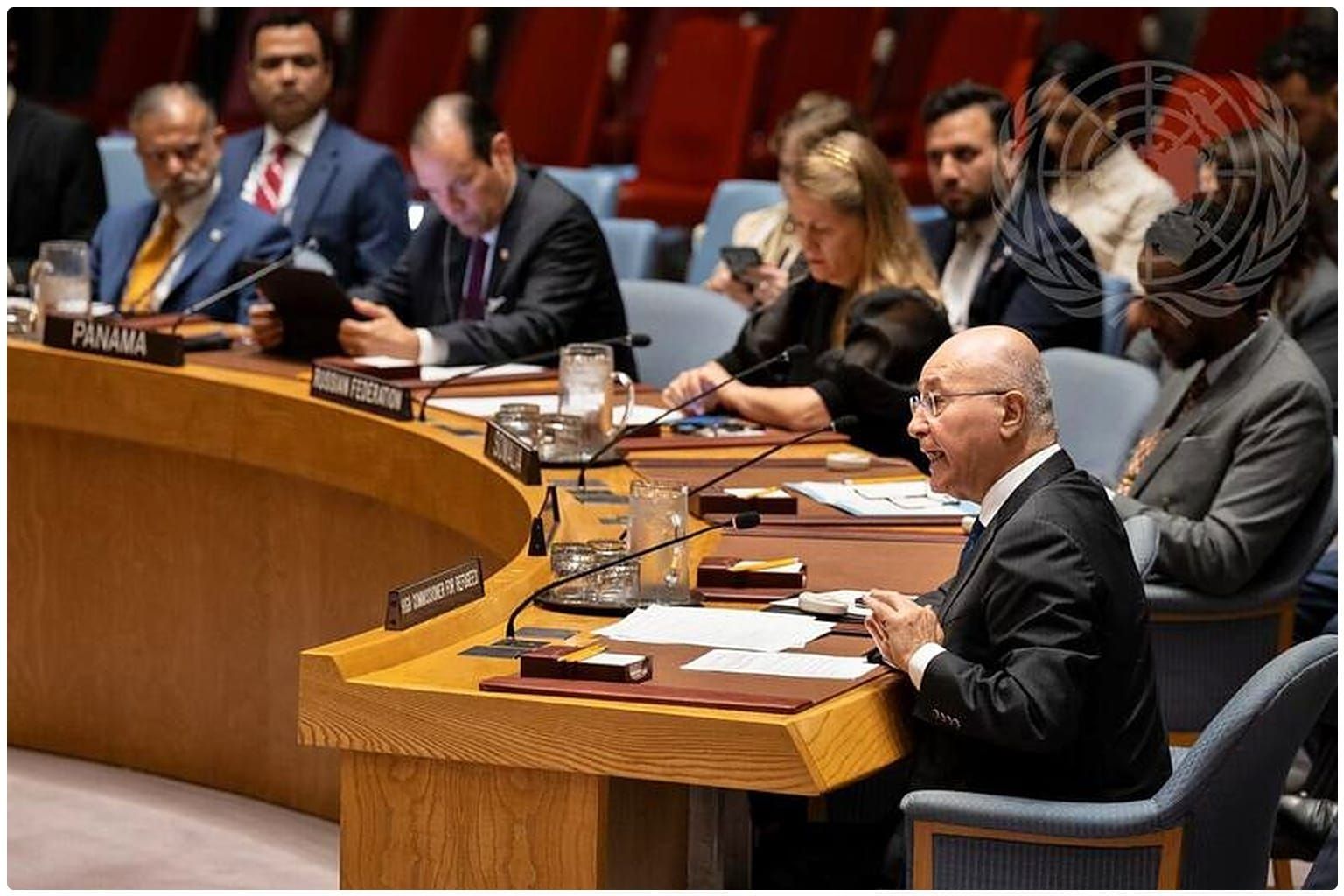
The UN Security Council has condemned the escalating Houthi attacks on Saudi Arabia, a rare moment of consensus for a body that has struggled to agree on much this year. The statement was delivered by the Council's rotating president, French envoy Jérôme Bonnafont. Council members condemned, in the strongest terms, continued Houthi attacks on the kingdom, including strikes on civilian and energy infrastructure that have injured civilians, among them women and children.
The Council demanded that the Houthis immediately halt their military escalation and their attacks on civilians and civilian objects. It stressed the importance of international law, particularly the UN Convention on the Law of the Sea, and of protecting freedom of navigation. It also called for full, safe and unhindered humanitarian access to all civilians in need.
The failed marshel of Pakistan has finally met with Soudi's King and affirmed commitment of the Mecca pact.
— Sagar STORM🔳 (@AlexAllone1) September 26, 2026
Will Pakistan join the War against Houthis to protect Soudi Arabia while his own foot soldiers are being butchered inside Pakistan itself??
The statement of the Soudi's… pic.twitter.com/k3K6Mr4svi
The statement follows months of mounting pressure on Riyadh. The Houthis resumed attacks on Saudi Arabia on July 13 as part of the wider Iran war. By July 20 they had declared a blockade of Saudi ports and shipping. The group calls this a "siege for a siege." It argues that the blockade answers Saudi restrictions on sea and air travel to Yemen, which Riyadh imposes to cut off Iranian weapons supplies.
Since then, the campaign has hit Saudi Arabia's energy lifeline. The Houthis have targeted Saudi-linked tankers near Yanbu, the kingdom's main Red Sea oil port. Yanbu has become the key export route for Saudi crude since Iran blockaded the Strait of Hormuz. In early September, a wave of attacks wounded more than 70 people and set fire to oil facilities and utilities in the kingdom's south.
On the ground, the conflict has changed sharply. After a rapid offensive, Houthi forces captured Yemen's entire Red Sea coastline, reaching the Bab al-Mandeb strait, one of the world's most important shipping chokepoints. The fighting has shattered the four-year truce in Yemen's civil war and pushed up global fuel prices. The human cost is rising too: some 138,000 people have been displaced across Yemen since August, including 70,000 children. That is the highest level of displacement since the 2022 truce.
The question of who is behind the Houthis hangs over the crisis. Washington, Riyadh and the Saudi-backed Yemeni government accuse Iran of backing the movement. Iranian President Masoud Pezeshkian denied this, saying the Houthis answer for their own actions.
The Council's statement also coincides with the first real test of a new regional security bloc. Saudi Arabia, Turkey and Pakistan signed the Mecca Joint Defence Agreement in August, weeks before the latest Houthi attacks began. The pact treats an attack on one member as an attack on all three. Military chiefs from the three countries have now met in Riyadh. They condemned attacks on Mecca and the kingdom's civilian and economic infrastructure and pledged to turn their commitments into effective military cooperation. So far, however, Pakistan and Turkey have not struck the Houthis.
For now, the Council has offered words rather than measures. Whether its rare unity translates into pressure on the Houthis, or whether Riyadh and its new allies decide to act on their own, may shape the next phase of a conflict that now threatens both Yemen's civilians and the world's oil supply.