For weeks, Saudi Arabia's airports have been coming under missile and drone attack. Passengers have been killed, flights disrupted and workers at oil installations caught in the violence. Washington has now decided the danger is too great for the families of its diplomats to remain in the kingdom.
The US State Department ordered non-emergency government employees and their family members to leave Saudi Arabia on October 21, following another day of deadly attacks. Spokesman Tommy Pigott blamed Yemen's Iran-backed Houthi movement, citing strikes on civilian airports and critical infrastructure that have caused casualties and severe travel disruption.
The order applies to Saudi Arabia, not the entire Gulf. Pigott corrected earlier reports suggesting Washington had authorised departures from several neighbouring countries. Essential diplomatic personnel will remain, although the number of Americans affected and their departure arrangements have not been disclosed.
The decision follows a particularly violent fortnight for Saudi Arabia's aviation sector. Riyadh's King Khalid International Airport has endured repeated attacks, including a strike on Terminal 4 that killed a Pakistani national and injured 11 others. The airport, among the kingdom's most important international gateways, has experienced closures and restrictions as authorities attempt to protect passengers and aircraft.
The repeated strikes have also exposed problems beyond missile interception. Saudi Arabia's national emergency-warning system went silent during several deadly attacks, despite having previously issued alerts about incoming military threats. Warnings resumed on October 12, but Riyadh has offered no public explanation for their absence during the earlier violence.
On October 21, an attack at King Fahd International Airport in Dammam killed one person and injured eight others, according to Saudi authorities. Investigators have not publicly established who carried out that particular strike.
Saudi Arabia's oil industry has been similarly exposed. Falling debris from an intercepted drone near Aramco's Shaybah oilfield killed a Filipino and a Nepali worker on Wednesday. An Indian and a Pakistani were injured. Saudi officials said the targeted processing facility remained operational.
The deaths came just over a week after an attack on Aramco's headquarters in Dhahran caused a limited fire. Authorities reported no casualties or confirmed interruption to production, but the incidents have demonstrated how far the fighting has reached into Saudi territory.
The escalation is closely connected to the renewed war in Yemen. Saudi-backed government forces have been fighting to recover territory around Bab el-Mandeb, where the battle for control of the Red Sea coast has brought Saudi air power into direct support of operations against the Houthis.
Washington faces growing demands to help Riyadh defend its airports and energy installations. The United States has provided defensive and intelligence support, while Britain has announced plans to send fighter aircraft. President Donald Trump has so far avoided another direct American military campaign against the Houthis.
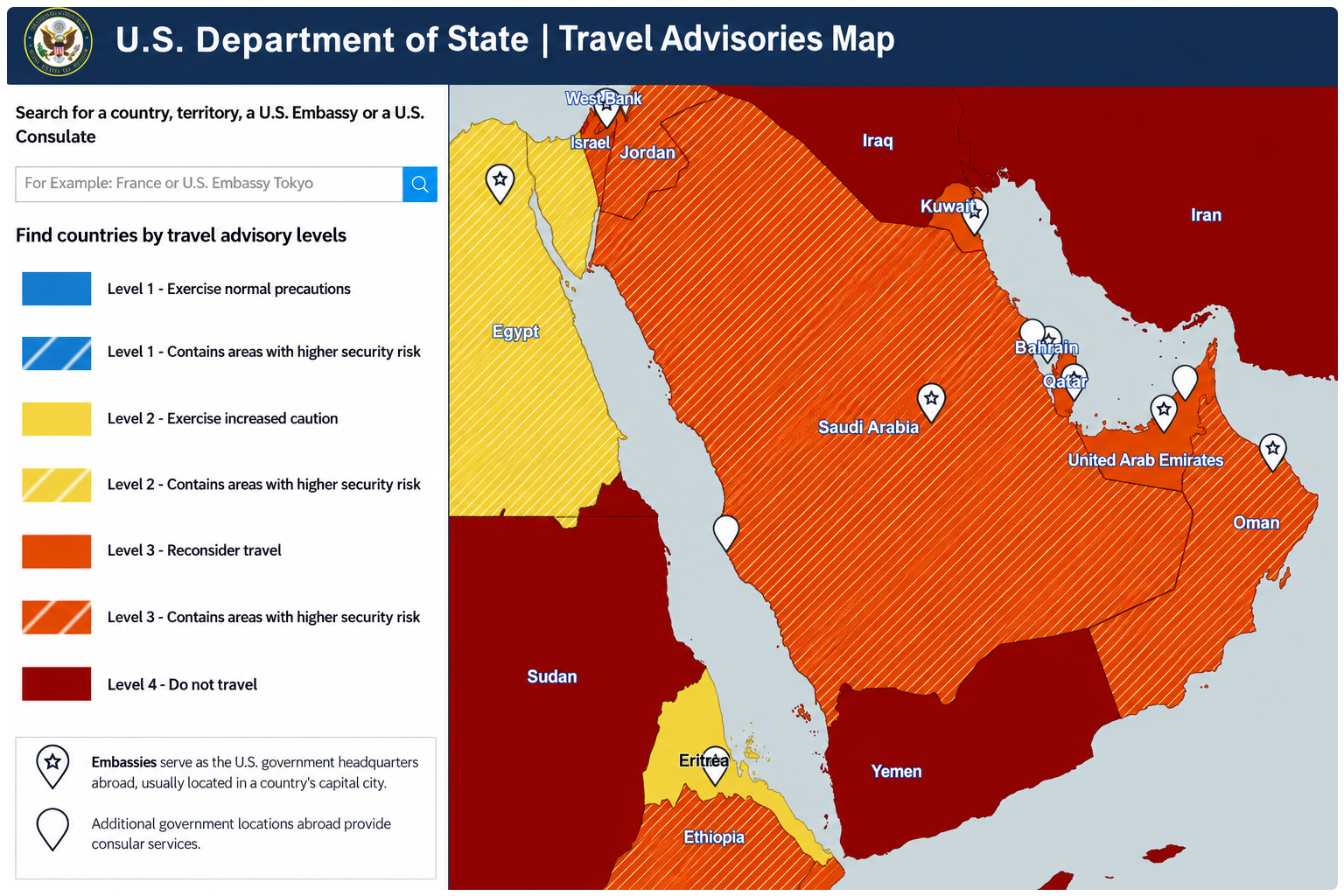
The US government's travel advisory for Saudi Arabia already urges Americans to reconsider travel because of missile and drone threats, armed conflict and terrorism. The latest diplomatic order leaves essential staff in place but reduces the number of American civilians exposed to those dangers.
Saudi Arabia remains a central American security partner in the Gulf. Yet the country now faces attacks at its airports, near its oilfields and against the infrastructure on which ordinary residents depend. Washington's decision to withdraw diplomatic families shows how seriously it is treating the threat, even as it stops short of committing to a larger military response.