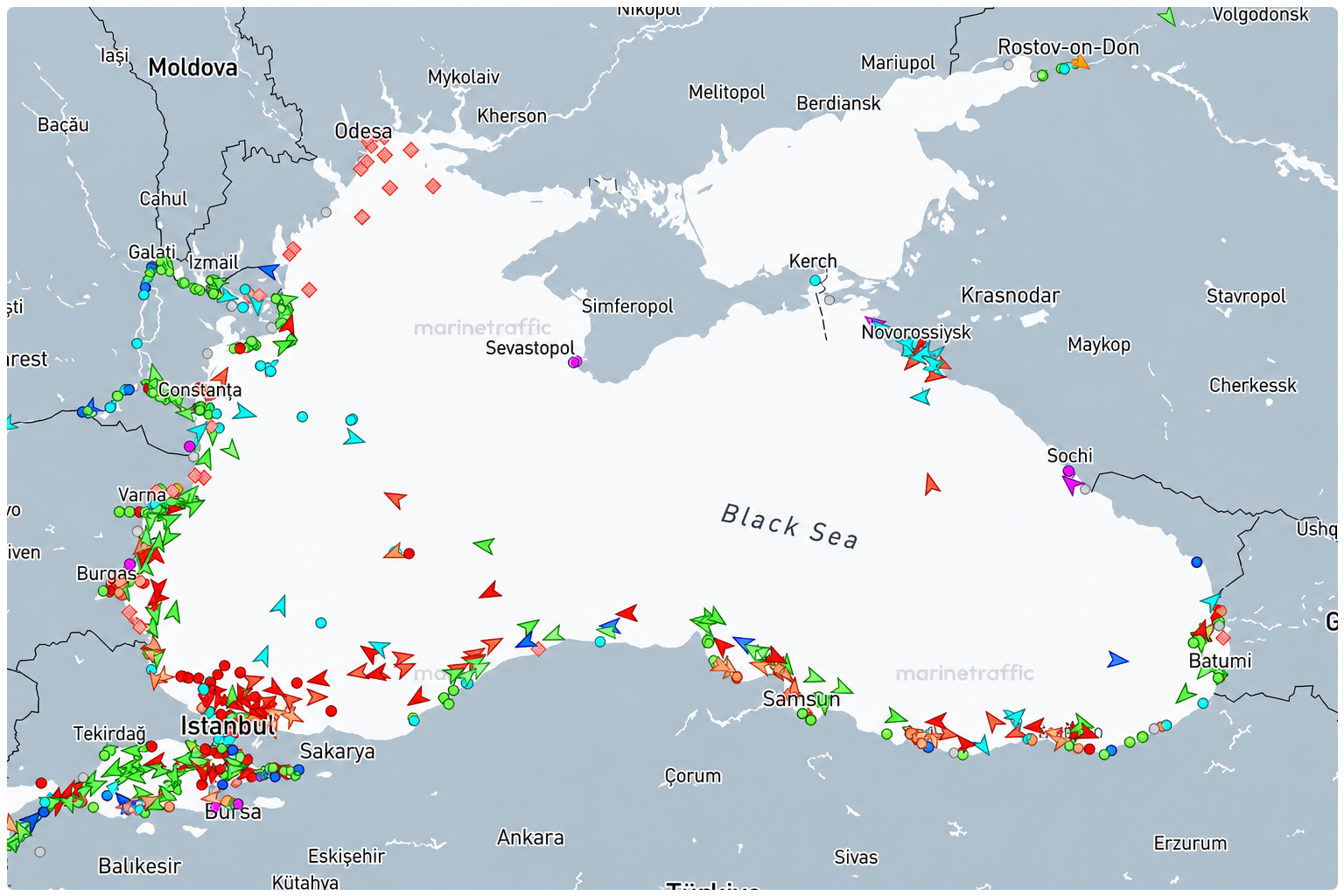
India and Türkiye have emerged as important participants in a renewed diplomatic effort to protect commercial shipping in the Black Sea, with Washington examining proposals for a limited ceasefire that would allow grain and energy shipments to move more safely despite the continuing war between Russia and Ukraine.
US Secretary of State Marco Rubio said on Saturday, October 31, that international interest in such an arrangement was increasing. Speaking after the G20 foreign ministers' meeting in Atlanta, he identified India and Türkiye as countries offering ideas to restore secure maritime trade.
Rubio's remarks marked a shift towards a more limited diplomatic objective. Rather than waiting for Moscow and Kyiv to agree on territory, security guarantees and a comprehensive settlement, participating governments are exploring whether the two sides could first accept restrictions on attacks affecting commercial vessels.
The US secretary of state's remarks at the Atlanta press conference reflected growing concern about the consequences of disrupted grain exports for countries dependent on Black Sea trade. Rubio also acknowledged that an agreement on shipping would leave the underlying war unresolved.
For India, the discussion represents an opportunity to extend its diplomatic involvement beyond appeals for dialogue. New Delhi has maintained relationships with both Moscow and Kyiv, while its interest in the safety of merchant vessels and international commodity supplies gives it a direct stake in the proposed arrangement.
The complete Indian proposal has not been made public. Washington has not disclosed a timetable for negotiations, a mechanism for monitoring compliance or guarantees that commercial ships would be protected from attack.
Türkiye's involvement has a longer history. Ankara helped negotiate the original Black Sea Grain Initiative in July 2022, establishing a system through which Ukrainian agricultural exports could reach international markets under a jointly monitored arrangement.
That initiative allowed more than 32 million tonnes of grain and food products to be exported before Russia withdrew in July 2023. It demonstrated that limited cooperation could function even while the two countries remained at war, although disputes over inspections and implementation eventually undermined the agreement.
Turkish Foreign Minister Hakan Fidan has since renewed calls for maritime restraint as attacks increasingly threaten commercial shipping. Ankara's concern has been reinforced by incidents involving vessels connected to Türkiye and other countries around the Black Sea.
The wider danger was illustrated by drone attacks on two commercial ships in Bulgaria's maritime zone, which raised concerns about the exposure of civilian crews and shipping routes beyond Ukrainian and Russian waters. NATO has subsequently expanded maritime surveillance in the region.
Canada has also placed freedom of navigation and food security on the diplomatic agenda. Ahead of the Atlanta meeting.
Ukraine has indicated its readiness to consider maritime de-escalation, but Russia has not accepted the latest proposals. Moscow has previously objected to arrangements that isolate shipping from the wider conflict.
For now, Washington is assessing diplomatic offers rather than announcing an agreement. The countries promoting a Black Sea truce have found common ground in protecting trade, but neither the proposed restrictions nor the arrangements for enforcing them have been settled.