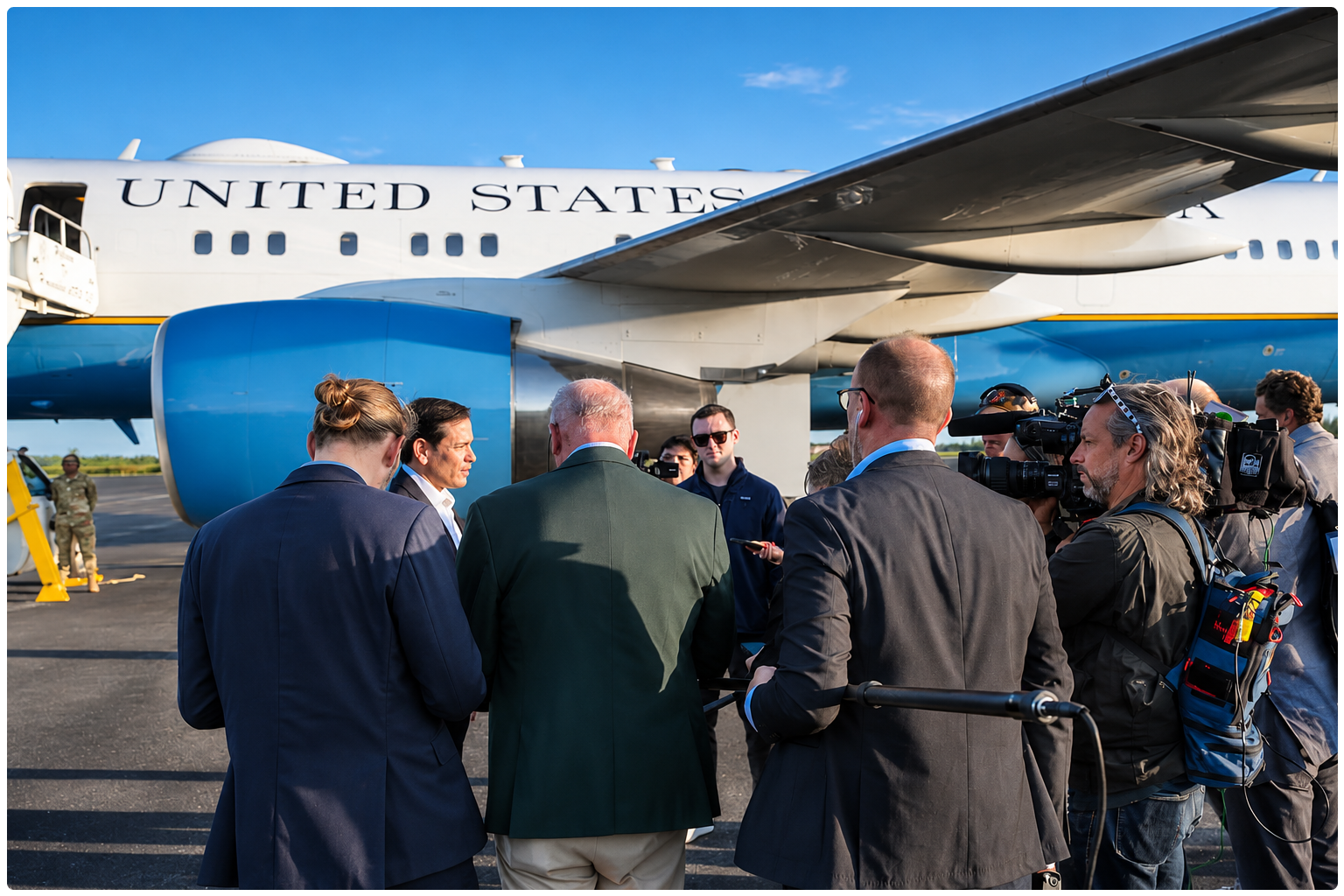
The political arithmetic in Washington has changed, but European governments have little reason to assume that American foreign policy will change with it. That tension will accompany US Secretary of State Marco Rubio to Paris on Monday, November 9, as G7 foreign ministers begin two days of discussions on Ukraine, Iran and the international crises in which President Donald Trump remains a central decision-maker.
The meeting comes days after Democratic victories in the US midterm elections altered the balance of power in Washington. The changing political environment is already influencing Moscow's diplomatic engagement with the Trump administration, with European governments assessing how the new congressional majorities could affect American foreign policy.
European governments have also pursued their own channels with Moscow. Finland and Norway recently reopened direct discussions with Vladimir Putin, reflecting their interest in ensuring that negotiations address the security concerns of Russia's European neighbours.
The Paris discussions also coincide with renewed peace negotiations involving Russia, Ukraine and the United States, scheduled for November 10–11 in Abu Dhabi. European governments are seeking clarity over the security guarantees that could accompany any settlement.
The European Council's October conclusions on Ukraine committed EU governments to continued financial and military assistance, alongside further pressure on Russia. Those commitments give European leaders a position from which to negotiate with Washington, although they do not resolve disagreements over the eventual peace terms.
France's official agenda for the G7 meeting identifies Ukrainian defence capabilities, financing and energy security as priorities. Ministers will also address the Middle East, disrupted energy supplies, humanitarian assistance and the security implications of artificial intelligence.
Iran presents another source of disagreement. American military operations and the wider conflict have unsettled energy markets, while European governments remain concerned about regional escalation and the consequences for maritime trade. France is also seeking international support for renewed security arrangements in Lebanon.
The G7 includes France, Germany, Italy, Britain, Canada, Japan and the United States, with the European Union participating in its discussions. France has additionally invited representatives from Ukraine, Brazil, South Korea, Egypt and Saudi Arabia.
Canadian Foreign Minister Anita Anand's announcement of her participation emphasised international security and cooperation among democratic partners, illustrating the breadth of issues on which ministers are seeking common positions.
The gathering was originally planned for Marseille. France subsequently transferred it to Paris, explaining that the change reflected logistical arrangements around the Paris Peace Forum, which follows immediately afterwards.
Trump's electoral setback has altered the domestic setting for these conversations, but it has not transferred the conduct of American diplomacy to Congress. Democratic majorities, when the new Congress convenes, could scrutinise spending, legislation and administration decisions more aggressively. The president will nevertheless retain substantial authority over negotiations and military operations within existing constitutional and statutory limits.
Rubio therefore arrives in Paris representing an administration facing greater political opposition at home, not a government whose foreign policy has already been rewritten.
For the European participants, the practical question is how much continuity they can secure from Washington while preparing for the possibility of sharper disagreements over Ukraine, Iran and the wider transatlantic relationship.