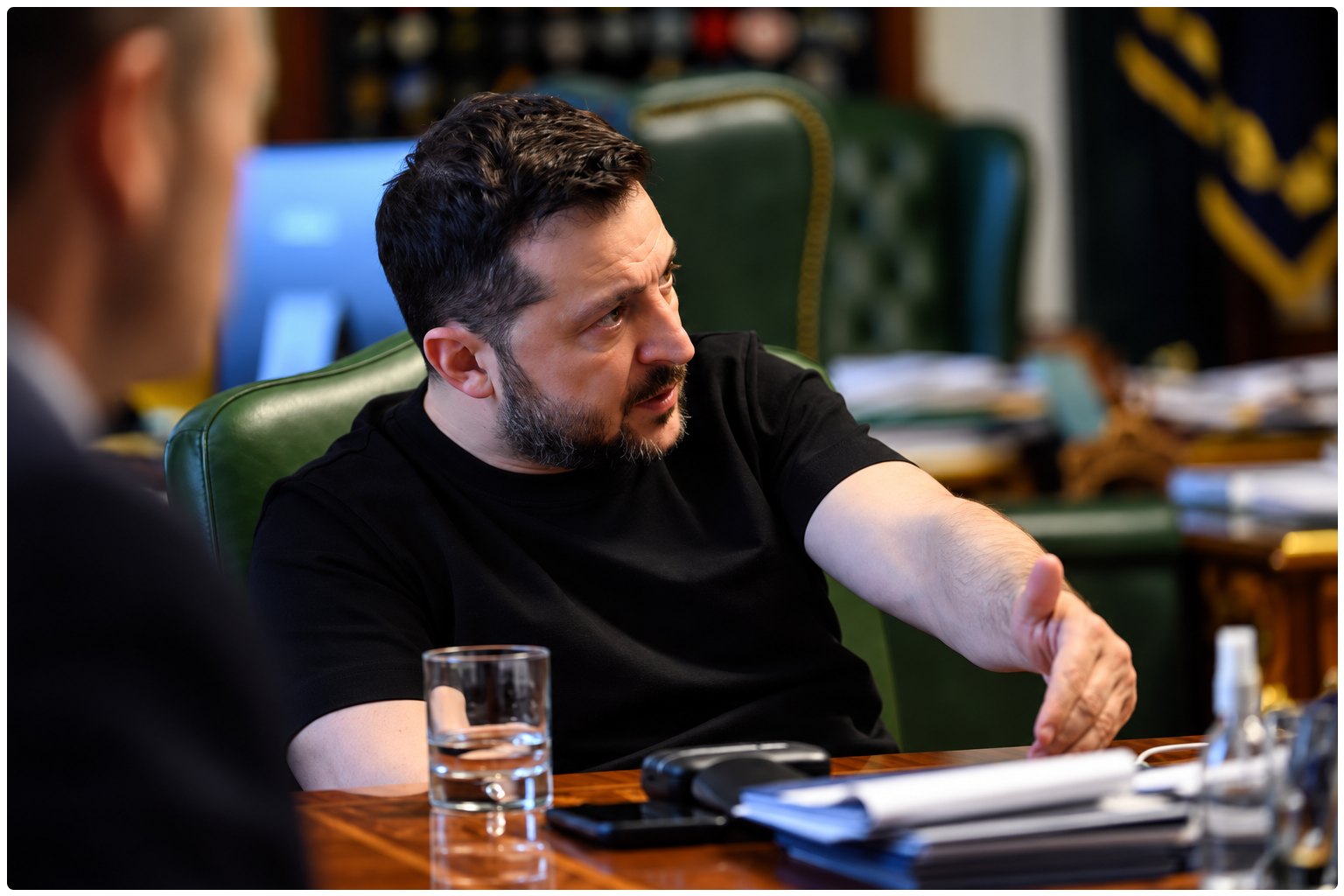
Ukrainian President Volodymyr Zelenskyy is visiting Britain for talks with Prime Minister Andy Burnham as London prepares to accelerate a new £45 million air-defence missile package for Ukraine.
The meeting at Downing Street comes as Russia intensifies attacks on Ukrainian cities, transport links and energy infrastructure ahead of winter. Air defence has become Kyiv’s most urgent military requirement as its forces confront ballistic missiles, attack drones and increasingly sophisticated jet-powered unmanned aircraft.
Under the new British support package, the UK will accelerate deliveries of Lightweight Multirole Missiles, commonly known as LMMs. Of the £45 million announced, £10 million will be fast-tracked to address Ukraine’s immediate winter requirements.
The British-made missiles have been used against aerial threats and are considered particularly valuable for intercepting jet-powered drones. Such aircraft can fly faster and higher than the propeller-driven Shahed drones widely deployed by Russia, making them more difficult to detect and destroy before they reach their targets.
Britain has already committed £1.6 billion to supplying Ukraine with more than 5,000 LMMs over four years. The latest announcement accelerates part of that programme rather than replacing it with an entirely separate missile system.
The package builds on an additional £100 million in British air-defence assistance announced in March. That commitment brought UK air-defence support announced during the preceding two months to £600 million and included funding for interceptors, more than 1,000 LMMs and cooperation between British and Ukrainian defence manufacturers.
Zelenskyy made the urgency clear during a telephone conversation with Burnham before the visit. He described air defence as Ukraine’s first priority after continued Russian attacks involving guided bombs, Shahed drones and ballistic missiles.
The talks follow another wave of Russian strikes on Kyiv and Dnipro and repeated attacks that have disrupted critical bridges in the Ukrainian capital. Ukraine fears that Moscow is attempting to weaken electricity generation, heating and transport systems before temperatures fall.
The new missiles should strengthen Ukraine’s ability to counter drones without using its most expensive interceptors against comparatively inexpensive targets. However, LMMs cannot by themselves resolve Kyiv’s shortage of higher-tier systems capable of stopping ballistic missiles. Ukraine therefore continues to seek Patriot interceptors and other advanced air-defence equipment from Western partners.
The Downing Street discussions are also expected to cover further military assistance, financial support and sanctions against Russia. Burnham has asked British ministers to prepare additional measures in the coming weeks, while the government plans to implement a maritime-services ban targeting Russian liquefied natural gas exports.
London is encouraging other governments to adopt similar restrictions on shipping and insurance services connected to Russian LNG. The objective is to reduce Moscow’s energy income while maintaining pressure for an end to attacks on Ukrainian infrastructure.
The diplomatic effort remains uncertain. Ukraine has offered a reciprocal halt to strikes on energy facilities, but insists that any arrangement must be monitored and observed by both sides. Questions have also emerged over Western policy after opposition developed to Washington’s Russian diesel arrangement.
For Kyiv, the immediate value of Zelenskyy’s visit will be measured in delivery speed. Political promises remain important, but missiles reaching Ukrainian air-defence units before the harshest winter attacks would provide the practical result his government needs most.